The following species are a selection of Costa Rican Lepidoptera. From giant silk moths to small iridescent curiosities, each has a wonderfully complex life history.
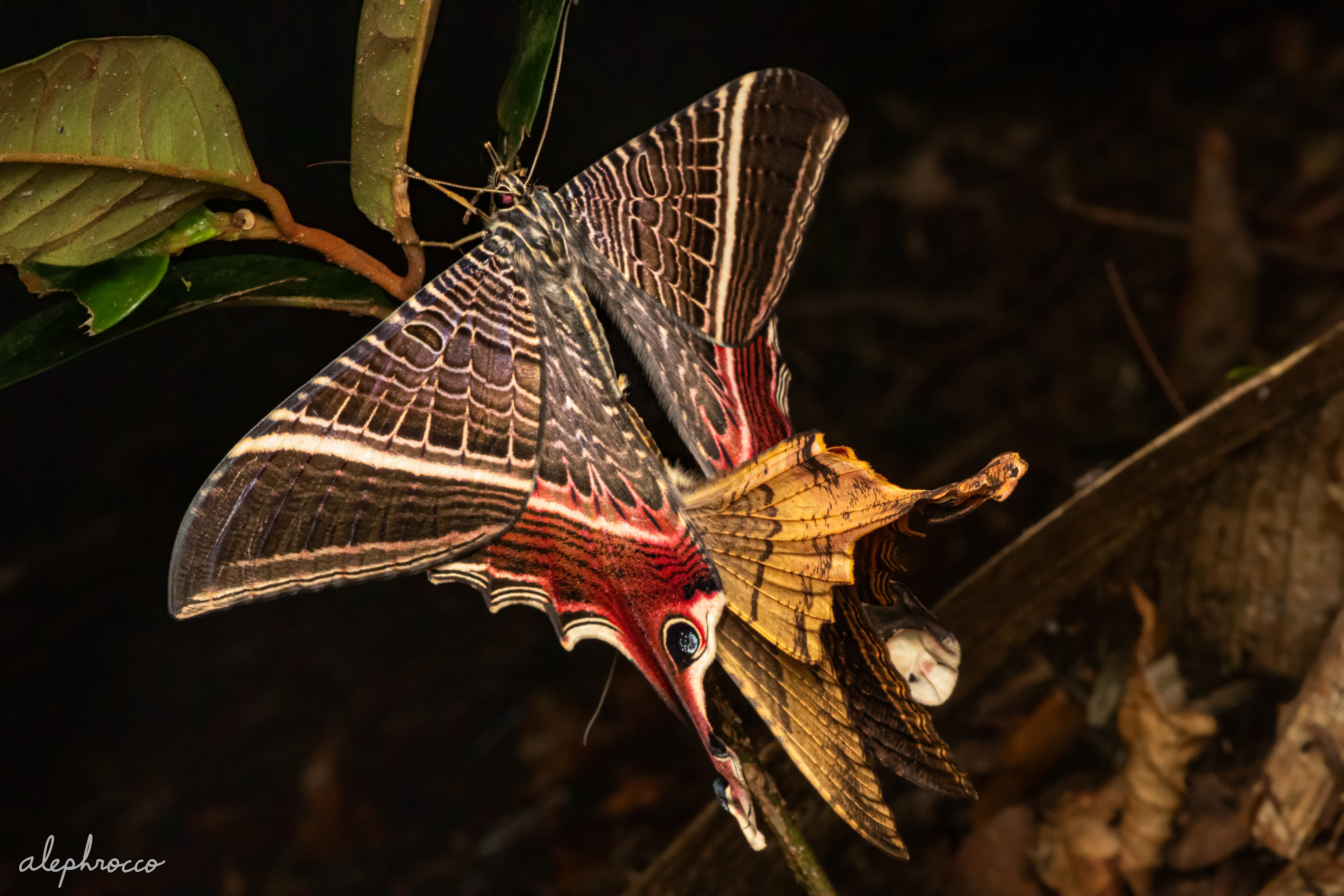
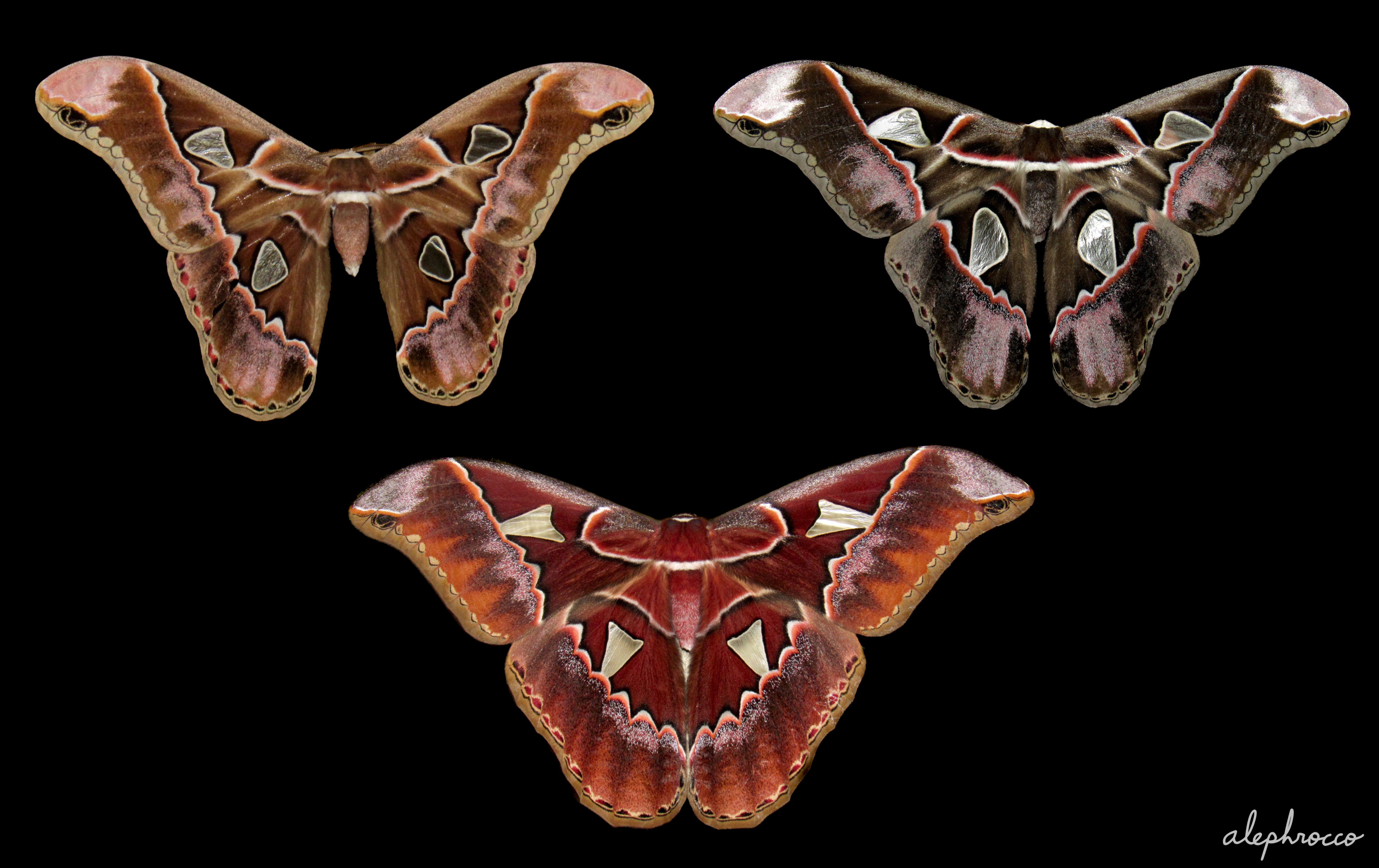
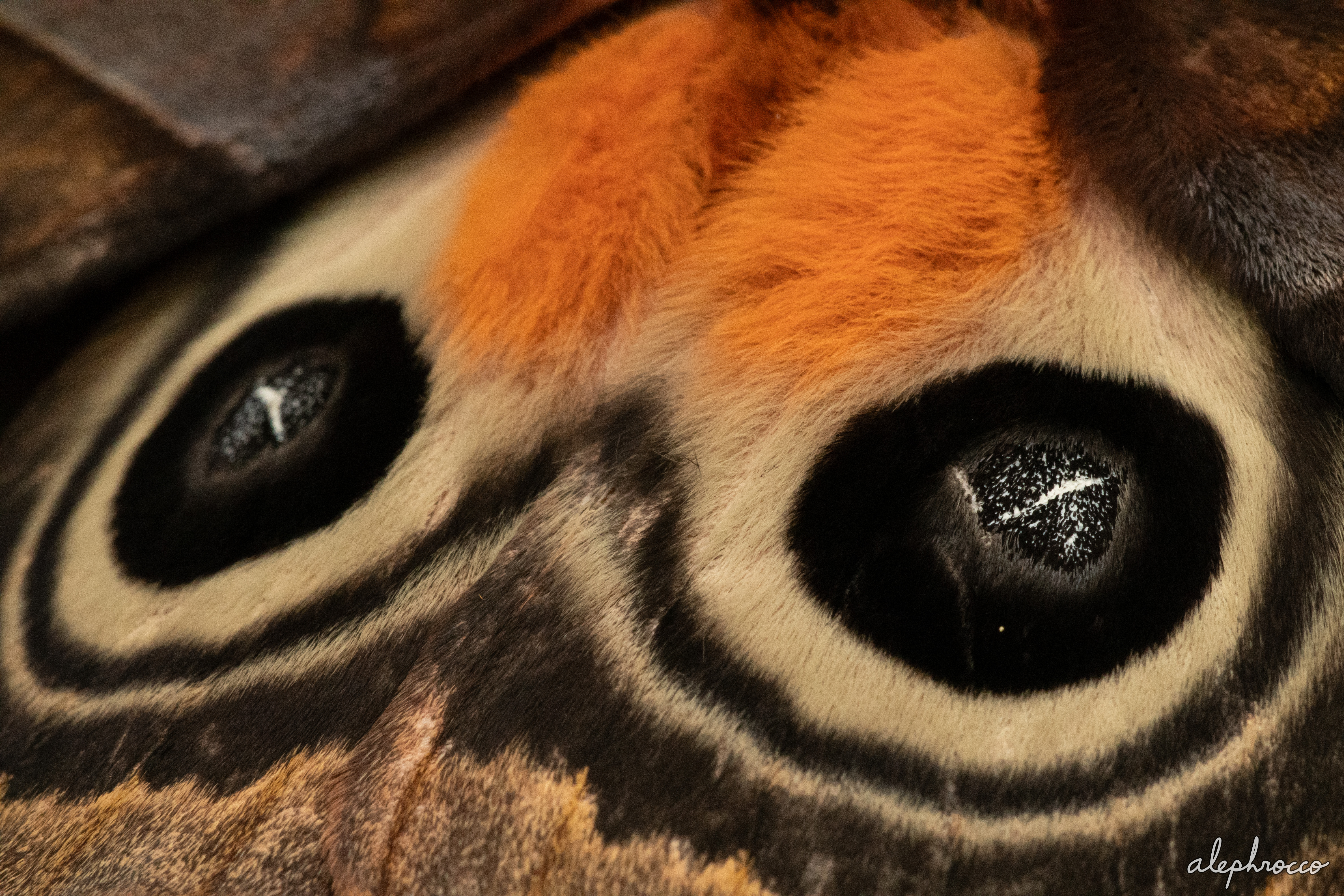
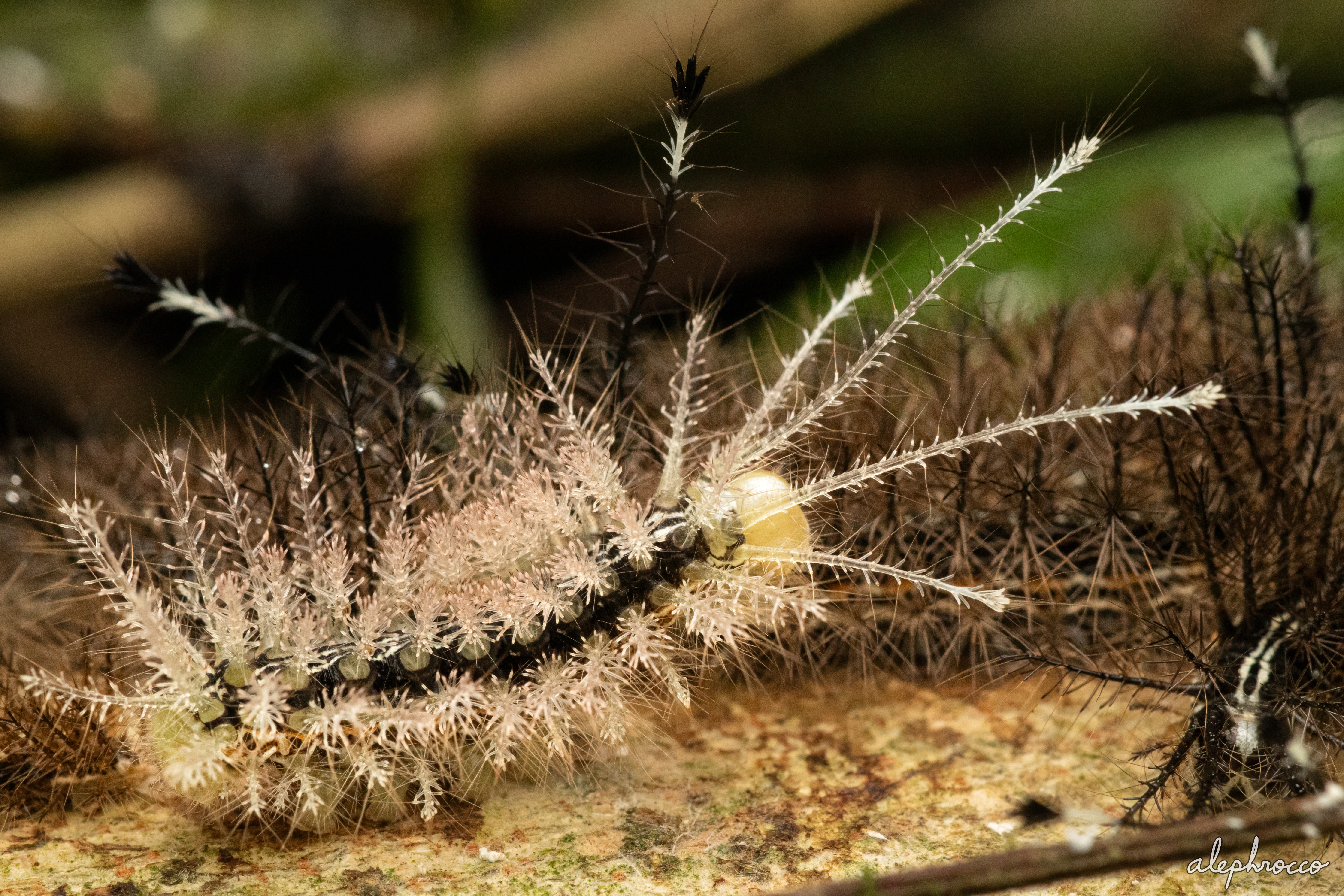
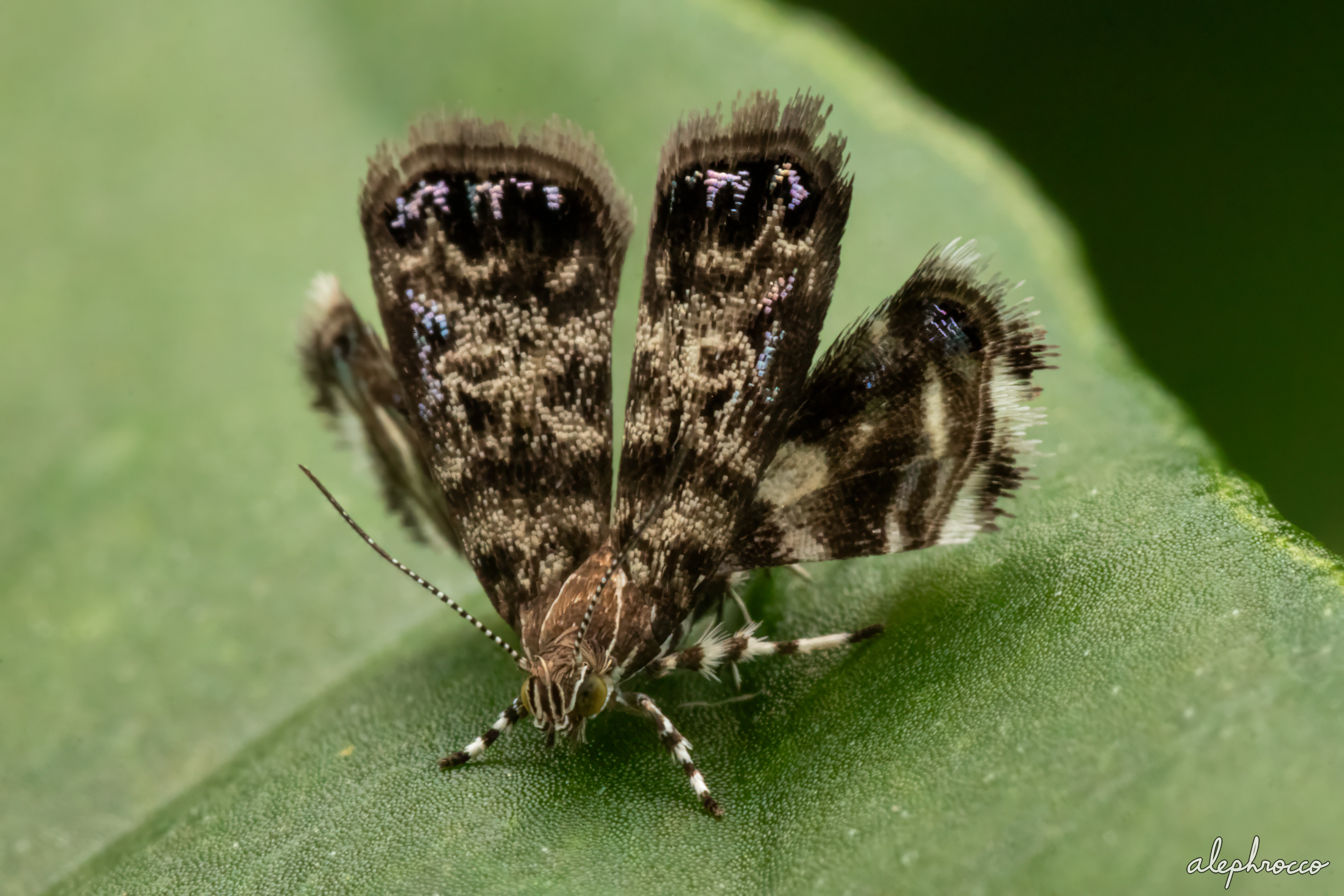
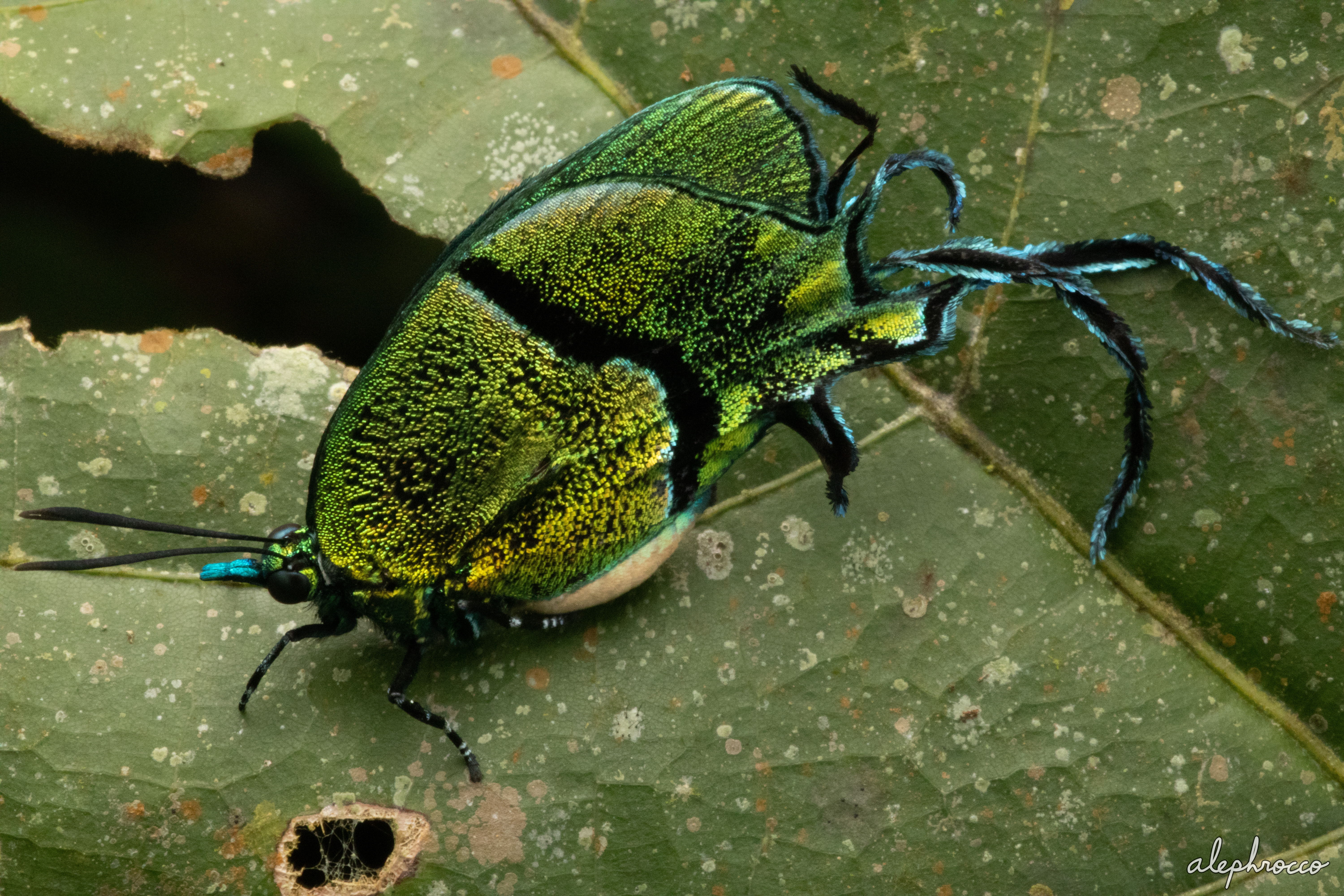
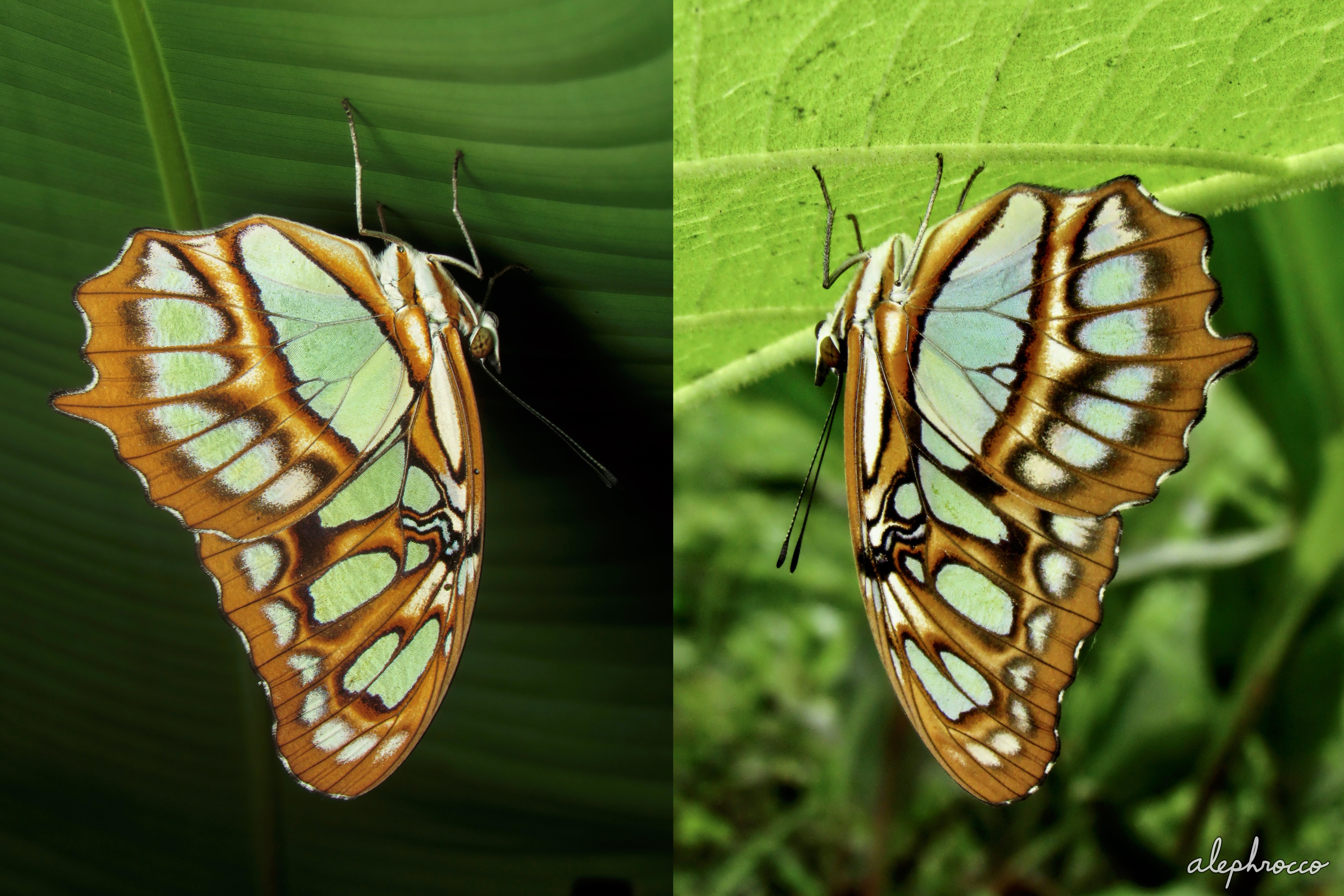
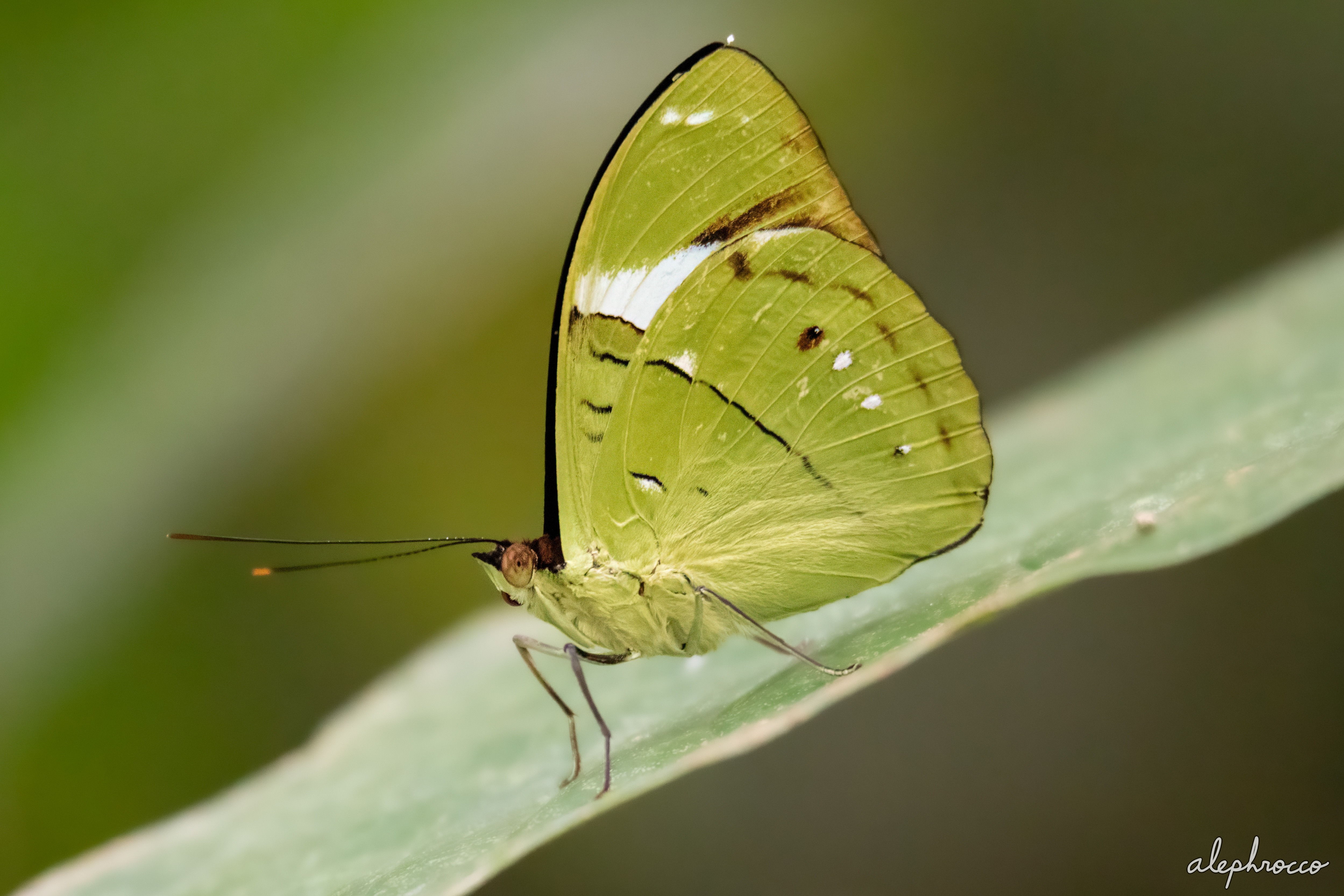
The owl-like eyes above belong to a moon eyetail moth, Mania (Sematura) lunus. They are part of a crepuscular/nocturnal family of tailed moths (Sematuridae). Extremely little is known about their ecology1. I was fortunate to find two mating, with the smaller individual (probably the male) underneath with the wings closed. Photographed in situ [1]Rothschildia silk moths (Saturniidae) are among the largest species of Neotropical Lepidoptera. These three individuals were spotted on the same night in the cloud forests of Monteverde, showing color variation from deep red to mahogany and chocolate brown [1]. Composite of separate photographs; left [1], center [1], right [4].Slit-like pupil on the eyespot of Automeris postalbida[5]Automeris postalbida is one of the most common large Saturniid larvae at La Selva. They are polyphagous and can be found feeding on palms, legumes, arrowroots, nettles, heliconias, and a few other plant families. Their sting proves to be formidable for most predators… I have yet to see them in a bird’s beak. Photographed in situ [1]Adults of the entire Automeris genus (and Hemileucinae subfamily) are cryptic at rest, concealing the hindwings underneath brown forewings. When touched, the moths flash their eyespots then flap away briefly, landing once again to reassume their camouflage. Photographed after capture [5]Three caterpillars of the prominent moth family (Notodontidae): center from Guanacaste and the remaining two from Heredia. Notodontids are bizarre caterpillars, bearing an enormous false head on the rear end and contorting themselves into unorthodox positions. Some bear red-colored “irises” or countershading that extends into the prolegs, while others like Crinodes (right) have a semitransparent cuticle revealing a gorgeous network of tracheae. I was so taken aback that I almost missed the snake mimicry. All caterpillars photographed after slight disturbance [2]Sphinx moth larvae (Sphingidae) are identifiable by a single horn on the posterior. The leafy sphinx (Xylophanes chiron) shows lateral white stripes, breaking up its outline as if sunlight filtered down through the canopy. Sphinx caterpillars have little chemical defenses but often can make a variety of noises (clicks, whistles, pops) when grasped by a predator. Otherwise, sphingids are unfortunately very susceptible to predation and are a favorite meal for forest inhabitants. Once, I saw a trogon make quick work of a few large caterpillars in rapid succession. Photographed in situ [1]An aggregation of hundreds of Hylesia caterpillars, full of urticating spines, not to touch. They are a processionary caterpillar. In single file, the caterpillars moved in perfect synchrony, a collective behavior thought to improve their defenses against predators, as well as locate food sources and adequate pupation sites. Hylesia are also one of exceedingly few moths that are also urticating as adults! Photographed in situ [1]Freshly molted early instar with white spines before sclerotization. Photographed in situ [1]Photographed in situ [1]Brenthia sp. (Choreutidae), a small micromoth that mimics jumping spiders, both in movement and appearance. They flutter rapidly away and upon landing, twirl in circles and loops with their wings splayed above. Spider mimicry is thought to make them a challenging prey from the perspective of jumping spiders— interestingly, they are in fact, mimicking their own predators. Photographed after pursuit [3]I don’t often encounter the Imperial Arcas (Arcas imperialis), but I was lucky to follow this one around the understory for a while. In response to my looming presence, the butterfly flattened itself on the side, with the wings nearly touching the substrate. Almost looking injured, this behavior likely served as masquerade to appear like a leaf. Like many others in the hairstreak family (Lycaenidae), they also move their tails up and down to resemble a head to divert predatory attacks from vital body regions. Arcas imperialis are among the most flamboyant species of butterflies. It is quite rare for a species to have iridescent green and turquoise. Photographed after pursuit [3]The Sara longwing (Heliconius sara) belongs to an extraordinary genus, foundational for the genetics of color patterns, mimicry complexes, and mechanisms of speciation. They are also pollen-feeding and roost communally at night— two rare behaviors among Lepidoptera. Photographed in situ [1]The malachite (Siproeta stelenes) is a bright green nymphalid whose larvae feed on host plants of the family Acanthaceae. These two individuals were observed in Tárcoles. Photographed in situ [1]Morpho butterflies are usually depicted with their iridescent blue sheen, but their ventral eyespots are equally beautiful. I spotted this Granada morpho (M. granadensis) resting low in the understory, a calm moment before commencing its erratic flight. Photographed in situ [1]Yellow-edged owl butterflies (Caligo atreus) are crepuscular, flying during periods of low light. Their eyespots have long been thought to serve solely an antipredator function2,3, but research suggests they may also play a role in reproductive behaviors4. Caligo atreus oviposit spherical sea urchin-like eggs on plants of the families Heliconiaceae, Musaceae, and Cyclanthaceae. Caterpillars grow very large and can be found together in high numbers, often devastating for their host plants. Photographed in situ [1]The common olivewing (Nessaea aglaura) blends in perfectly into the low green light of the understory. On the dorsal wings, they have true blue pigments (as opposed to structural blue), which is rare among arthropods. They are thick-bodied and powerful fliers, much like the Preponini. Only during their swift bursts of flight, you can have a short glimpse at their bright dorsal colors. Photographed after pursuit [3]