
Feel free to get in touch with me via email about sharing my photography or to chat about natural history!
alephrocco9@gmail.com


Welcome to my natural history blog! My name is Christian Alessandro Perez-Martinez. I am a behavioral ecologist interested in understanding how ecological pressures shape animal behavior and cognition, with a strong emphasis on natural history and tropical systems. I completed my B.A. in Integrative Biology at Harvard, my Ph.D. in Biological Sciences at Mizzou, and I will begin working as a NOMIS-STRI postdoctoral fellow in fall 2026 (see research projects below). Through my blog, I strive to convey the beauty and complexity of organismal biology and behavior, illustrating that we share this planet with life of all forms and functions. I hope that the narratives of my encounters and the ramblings of what I find fascinating instill curiosity and love for the natural world.

Below is a summary of my research in reverse chronological order. The projects are broken up into four different sections: 1) book chapters, 2) primary research program, 3) research led by collaborators, and 4) natural history notes. Major themes include behavioral ecology, neuroethology, predator-prey interactions, and animal coloration. For my latest work, you can visit my profiles on Google Scholar, ResearchGate, and ORCID. For photography, visit my blog’s Home Page.
Book Chapters

Natural History of Costa Rican Arthropods
Ever since my first field season in Costa Rica in 2016, I’ve been drawn back to the neotropics. I have a strong affinity for very small animals and for understanding how they carry out their life histories, which has been a driving force for my pursuit of a career in science. For this reason, I was excited to contribute a book chapter on the natural history of Costa Rican arthropods. The chapter presents a collection of my natural history observations in the context of the long history of science conducted at La Selva Biological Station. Starting with the beloved leaf mantis (Choeradodis rhombicollis) and ending with enigmatic velvet worms (Epiperipatus spp.), the chapter discusses species in light of their evolutionary ecology and complex behaviors. The entire book (release date: Sep 29, 2026) offers a window into the plants and animals in the lowland rainforest, along with > 800 photographs illustrating their astounding biodiversity.
Primary Research Program

Habitat Complexity & Spider Neuroethology
In fall 2026, I will begin my work as a NOMIS-STRI postdoctoral fellow in animal behavior, examining the impact of habitat structure on animal foraging behavior and neuroanatomy. In the tropical forests of Panama, I will study jumping spiders (tribe Euophryini) that specialize in hunting diverse ant species that occupy contrasting microhabitats. Ant workers possess formidable weaponry and coordinated defense, yet specialized tactics for preying on ants have evolved independently across several lineages of jumping spiders. My projects will uncover variation in habitat structure at fine spatial scales via LiDAR, quantify spiders’ 3D spatial foraging strategies, and examine the effect of changes in habitat structure on spider brain development. [Photo: Corythalia predation on Aphaenogaster, while an army ant raid loomed nearby; Bananito, Costa Rica]

Evolution of Miniaturization in Lizards
Behaviour 158(12-13): The impact of body size on organismal biology continues to fascinate biologists, particularly for miniaturized animals at the smallest extremes. Geckos of the genus Sphaerodactylus are characterized by their diminutive size, species richness, and radiation across diverse Caribbean habitats. During my Ph.D., I first contextualized Sphaerodactylus within the lizard phylogeny, demonstrating the repeated evolution of miniaturization across 11 families, corroborating brain size (and a relative increase in telencephalic volume) as a limiting factor for body size, and revealing an ecological shift to terrestrial microhabitats for miniaturized species. These findings served as a springboard to evaluate the potential consequences of miniaturization in Sphaerodactylus on activity patterns, thermal physiology, and social behavior.
Activity Patterns via Vibrations
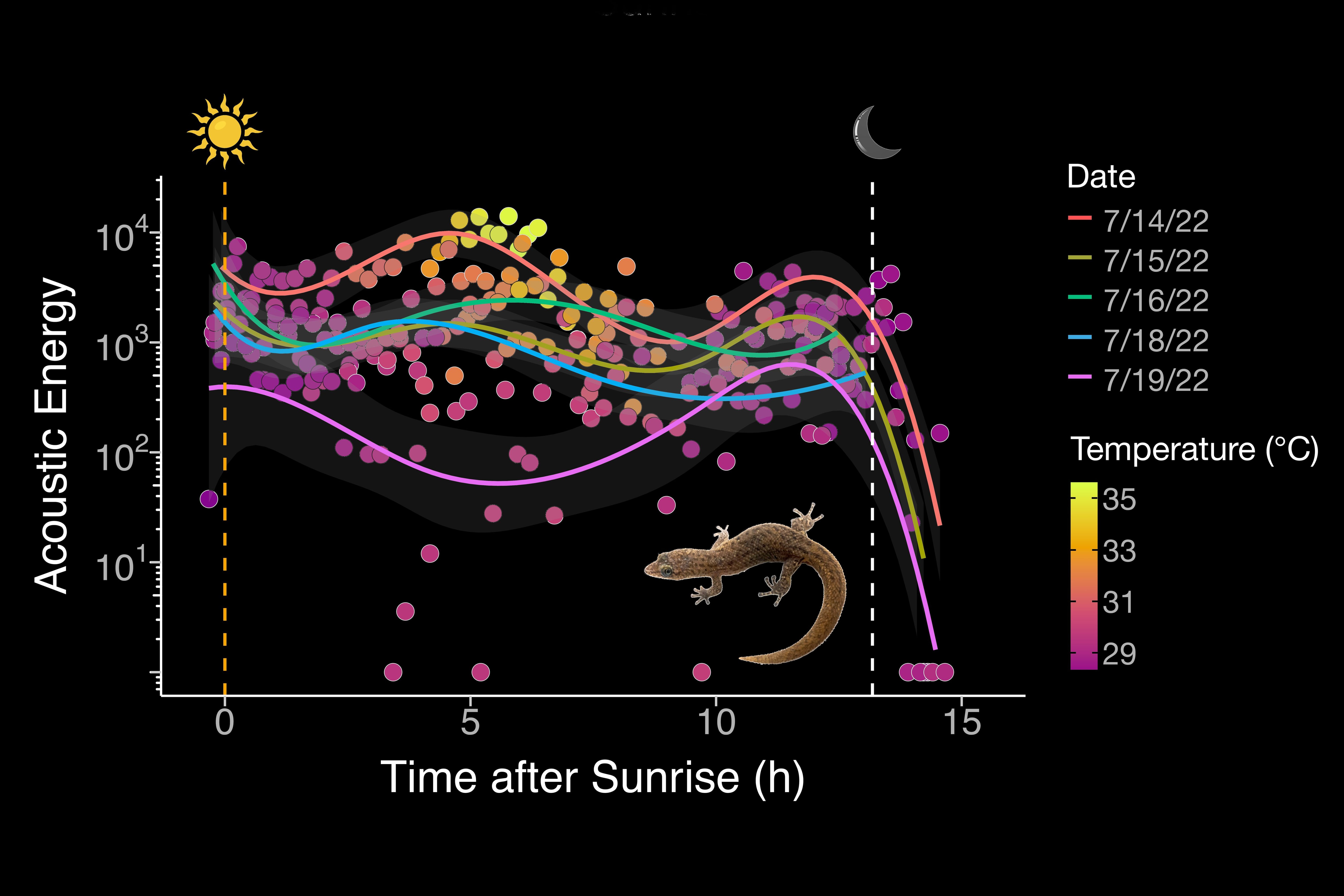
Oecologia 207(144): In Puerto Rico, I used substrate-borne vibrations in the leaf litter to measure activity patterns of Sphaerodactylus geckos in mesic and xeric habitats. The dichotomy between habitats allowed me to test the hypothesis that microclimate conditions drive divergence in thermoregulatory behavior. For each species in its native habitat, vibrations were measured within a field enclosure at two depths to characterize behavioral responses to diel cycle, microclimate, and predatory bird calls. Mesic S. grandisquamis showed continuous activity at all depths, whereas xeric S. townsendi increased its activity at deeper levels during hot and dry conditions. Geckos also reduced their surface activity immediately after the onset of predatory bird calls. In sum, Sphaerodactylus exploit their niche in a three-dimensional manner, and vertical movement is used to behaviorally buffer climatic changes and reduce predation risk.

Thermal Physiology
Physiological traits are shaped by habitat conditions to favor homeostasis, yet few studies have tested whether this pattern extends to miniaturized taxa. I measured standard metabolic rate (SMR) and evaporative water loss (EWL) via open-flow respirometry in five Sphaerodactylus species from three habitat types in Puerto Rico. Submontane S. klauberi exhibited the highest SMR and EWL, whereas xeric species showed the lowest SMR and shared low EWL with mesic S. grandisquamis. However, similar temperature sensitivities (Q10) across habitat types indicate parallel temperature-dependent scaling of reaction rates. In sympatry, S. roosevelti is characterized by lower SMR and EWL than S. nicholsi, suggesting physiology may underlie thermal niche partitioning. Overall, baseline physiological shifts in Puerto Rican Sphaerodactylus confer adaptive responses to habitat conditions and facilitate coexistence.

Social Recognition & Dynamics
Geckos of the genus Sphaerodactylus attain the highest population densities among terrestrial vertebrates, facilitated by their miniaturized body size. For S. grandisquamis in the Puerto Rican karst, repeated observations of the same individuals in proximity led me to investigate the possibility of social recognition and the effect of the social environment on individual behavior. In the lab, I established individuals in groups and translocated individuals between them in a round-robin fashion. Geckos performed more exploratory and agonistic behaviors toward unfamiliar individuals, supporting social recognition. Interaction networks also revealed that within-group sex ratios influence an individual’s response to unfamiliar geckos outside of the group. Social recognition and dynamics are perhaps unexpected for this putatively solitary species.
Antipredator Behavior & Coloration
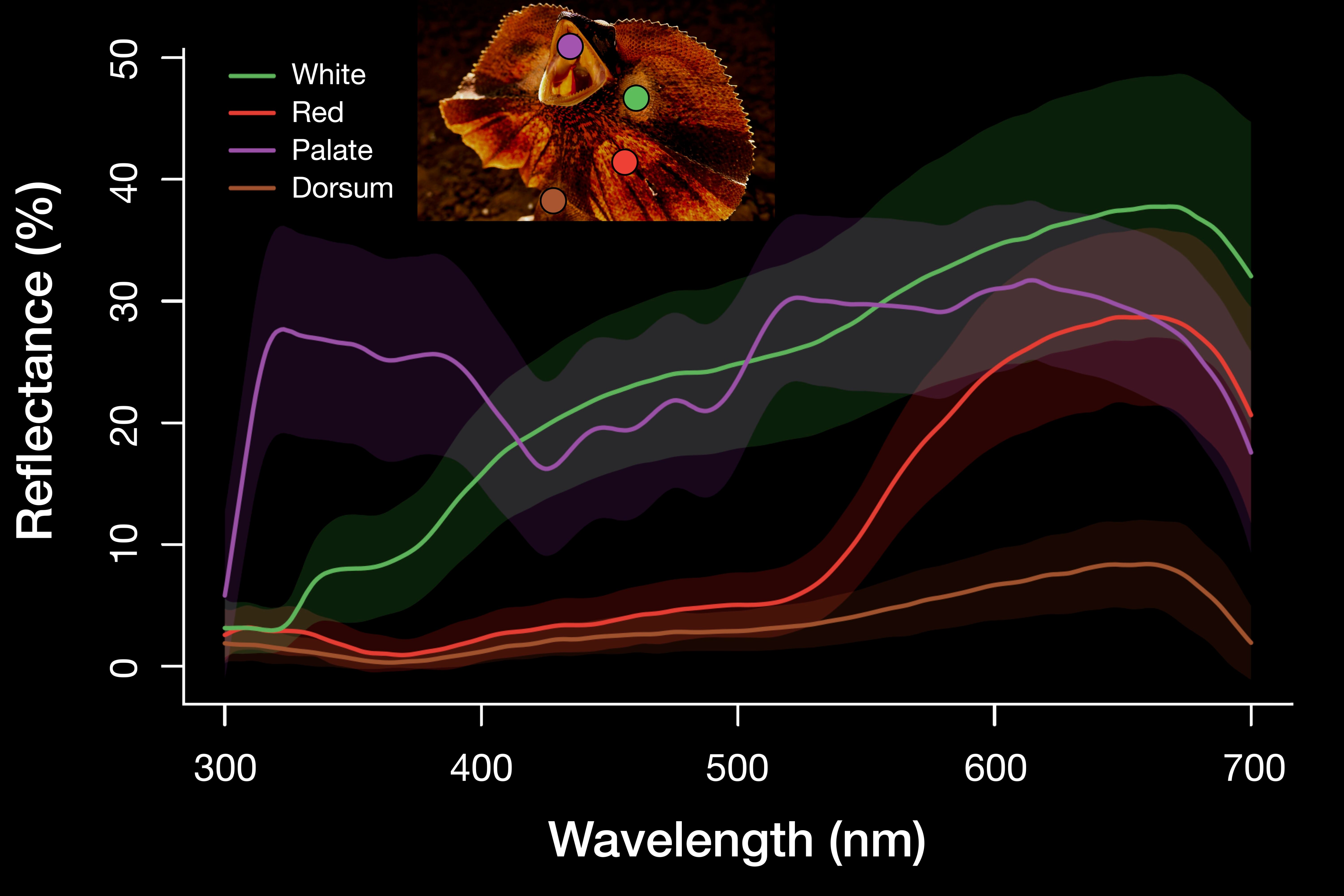
Biological Journal of the Linnean Society 129(2): The display of the frillneck lizard (Chlamydosaurus kingii) is one of the most iconic in the animal kingdom, yet studies examining its function in different ecological contexts are scarce. At Fogg Dam Conservation Reserve, I collected frillies high up in the eucalypt forest as they slept at night, characterized the frill’s role during assays with a model avian predator, and modeled frill color as perceived by a raptor’s visual system. Behavioral assays demonstrated that the lizards’ use of the frill is consistent with that of a deimatic display. The frill was deployed instantaneously upon the introduction of a predatory threat, accompanied by movements that amplified its effect. Visual models indicated that three color patches (white, red, and yellow/UV palate) facilitate a transition from a cryptic to a highly conspicuous state. If future work reveals a role of the frill in social interactions, it would be an exceptionally rare structure with a dual function in antipredator and social displays.

Ecological Morphology
Breviora 570(1): Anole lizards are a model system for the study of evolutionary diversification. Across the Caribbean islands, anoles show one of the most striking examples of evolutionary convergence. Species have evolved to fill similar ecological niches across different islands, with ecologically similar species sharing morphological and behavioral traits that are nearly identical to the untrained eye. Although patterns are consistent in island ecosystems, anole radiations in mainland Central and South America depart from these evolutionary trends. I studied an anole community in the Atlantic lowlands of Costa Rica, at La Selva Biological Station, revealing overlapping niches, considerable intraspecific variation in habitat use, and a relationship between hindlimb length and habitat use that does not conform to that of insular species. High predator and non-anole competitor diversity may explain why morphological variation is structured differently in mainland ecosystems.
Research led by Collaborators

Skeletal Morphology of Worm-Lizard Ears
PloS ONE 19(11): Worm-lizards (Amphisbaenia) are an enigmatic group with unusual morphologies among lizards. They are fossorial, with rudimentary light-sensing eyes, rectangular scales in parallel rows, and move with worm-like undulations and flicks of their forked tongue. Interior to their worm-like appearance lies a remarkable diversity of skeletal structures, especially in the cranium, which accompanies their ecological specialization for burrowing. In this article, we show that species also exhibit diverse arrangements of the inner ear labyrinth and middle ear. While some characters are independent of evolutionary history, many are informative for assessing phylogenetic relationships in this obscure clade.

Musculoskeletal Modeling
Integrative Organismal Biology 6(1): Anole lizards are a model system for understanding adaptive diversification and the evolution of ecological and functional morphology. Using diceCT scans of Anolis pulchellus (grass-bush ecomorph) and Anolis sagrei (trunk-ground ecomorph), we illustrated methods for characterizing musculoskeletal anatomy in the jaw adductor chamber. Muscle volumes segmented from surface attachments and cranial landmarks showed repeatable variation among observers, with a strong signature of sexual dimorphism in A. pulchellus. Muscle fiber architecture in A. sagrei revealed variation in fiber orientation among isolated jaw muscles (see figure), which can inform future studies on cranial performance in different ecological contexts.

Evolution of Visual Signal Diversity
American Naturalist 200(2): Habitat light conditions can shape the evolution of animal visual signals, favoring colors that are highly conspicuous to the receiver’s visual system. Following the sensory drive hypothesis, during speciation, signals will differentiate to enhance their efficacy across diverse microhabitats. Although strong evidence exists in aquatic systems, sensory drive has been documented less often in terrestrial systems. We considered 17 Anolis species from Jamaica, Puerto Rico, and the Dominican Republic and used phylogenetic comparative methods to show a robust correlation between habitat light intensity and dewlap color. Pairwise comparisons between closely related species revealed that red dewlaps are most visible in bright habitats, and yellow/white dewlaps are most visible in low-light habitats. Our study identifies sensory drive as a mechanism that favors divergence in colorful signals and may contribute to speciation in anoles.

Habitat Complexity & Neuron Number
Biology Letters 20(2): Structural elements in a species’ habitat place demands on animal cognition. More complex habitats require a greater capacity for information processing during spatial navigation and species interactions, as well as for learning and memory. Over evolutionary timescales, species can accrue neuroanatomical differences influenced by habitat complexity. Historically, research has focused mostly on relative brain size, whereas variation at finer anatomical levels is less well understood. We examined the Puerto Rican radiation of anoles to test whether habitat complexity is associated with differences in neuron number. Species from more complex habitats had greater neuron numbers in the telencephalon and other major brain regions, but not in the cerebellum, suggesting that habitat complexity shapes a species’ capacity for sensory integration at the neuronal level.

Nutrient Translocation in Ant Acacias
Ecology and Evolution 12(1): East African whistling thorn acacias (Acacia drepanolobium) are among the most dominant trees on the black cotton soils of the arid grasslands in central Kenya, forming monocultures across the landscape. Fire is a powerful, recurrent force, favoring plant traits that respond to smoke cues and make physiological adjustments that promote post-fire survival and growth. We examined nutrient composition of different plant tissues in acacia trees of three age classes, before and after smoke exposure. In 2-year-old acacias, nitrogen concentrations were lower in leaves and higher in roots compared to controls, but we did not replicate these findings in younger acacia trees. The data, in part, is suggestive of smoke-induced translocation of nutrients from leaves to roots, which would represent an adaptation to fire regimes.
Natural History Notes

Vocalizations in an Australian Blind Snake
Herpetology Notes 16(2023): Unlike most vertebrates, snakes lack vocal cords, yet they employ a diversity of methods for sound production, including tail vibration and rattling, scale abrasion, cloacal popping, and hissing. Hissing involves lung contraction and the expulsion of air through the glottis, generally with very little frequency or amplitude. Unorthodox sounds have been documented in king cobras (Ophiophagus hannah), one colubrid genus (Gonyosoma), and the pine snake (Pituophis melanoleucus) due to modifications in their trachea and larynx. However, tonal vocalizations in snakes remain extremely rare. In the monsoonal floodplains of northern Australia, I recorded vocalizations in the claw-snouted blind snake (Anilios unguirostris), featuring harmonically structured bands (see video). The potential function is unknown, but speculating wildly, it could be used as a distress call to escape a predator or to manipulate the behavior of its ant and termite prey in subterranean tunnels.

Oviposition inside Snail Shells by Miniaturized Geckos
Upon arriving to the northern karst forests of Puerto Rico, I was determined to learn where miniaturized geckos go in the leaf litter and discover aspects of their natural history. Land snails (Caracollus caracola) were abundant in moist forest patches, and given their large size, I wondered if geckos use their empty shells as refuges. Although I did not find any geckos inside the shells, I was surprised to find one egg deep within the whorls. This led me to collect ~60 shells, shaking each by my ear to listen for loose eggs inside. I recovered 3 viable eggs (which later hatched) from 3 snail shells, as well as egg fragments in 5 additional snail shells. The use of land snail shells as oviposition sites or refugia is most often reported in arthropods, but rarely in herpetofauna. To date, it has only been documented in gekkonids from the fossil record and in two anuran species (Phrynobatrachus guineensis and Mertensophryne micranotis).

Reproductive Niche Differentiation in Tree Frogs
Biotropica 55(1): Early hatching in arboreal-breeding frogs can be induced by cues from environmental threats. In Agalychnis tree frogs, embryos break free from their jelly masses to continue developing as tadpoles in the water below. Previous work on co-occurring red-eyed tree frogs (A. callidryas) and gliding tree frogs (A. spurrelli) revealed similar embryonic responses to inundation but contrasting responses to predator vibration cues. Our natural history observations in Corcovado National Park, Costa Rica, provide one potential explanation. For A. callidryas, egg masses showed higher rates of invertebrate predation, and 30% were found on the underside of vegetation hanging down from the canopy. For A. spurrelli, snake predation was most common, and 28% were found on vegetation emerging from the water’s surface. Although the egg masses of both species showed 70% overlap at the wetland edge, differences in oviposition sites likely influence predation risk and how selection shapes embryonic behaviors.
Dunging Behavior in a Crab-Eating Frog
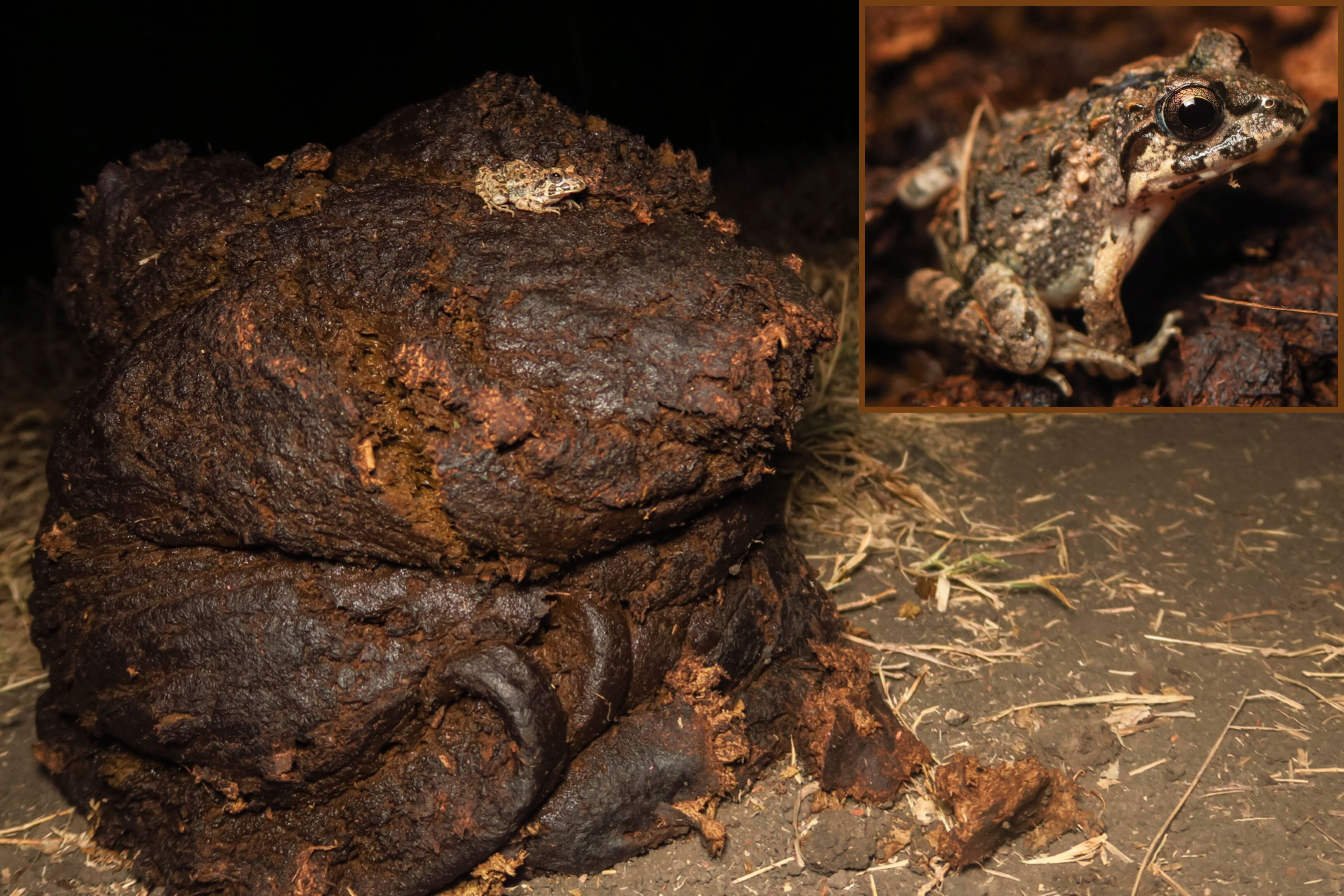
Herpetological Review 51(1): Across the dry savannas of the Lesser Sundas, mesic microsites provide amphibians with moisture and ambush sites to capture arthropod prey. For example, on Rinca Island, we encountered frogs occupying tree holes (e.g., Kaloula pulchra) and shallow water bodies (e.g., Fejervarya limnocharis). Curiously, we made repeated observations of crab-eating frogs (e.g., Fejervarya cancrivora) perched atop water buffalo dung at night — so much so that when we spotted fresh dung from a distance, there was a 50-50 chance we would find a frog waiting for us. Contrary to its name, F. cancrivora is an opportunistic predator of a variety of arthropods, many of which are attracted to fecal matter. Although water buffalo were introduced to Southeast Asia only over the last 5,000 years, dung from Komodo dragons and now-extinct dwarf elephants (Stegodon) could have provided the frogs with suitable substrates for this behavior.